Company owes more than R$200 million to the Union; 400 families participate in the mobilization on the morning of this Monday (February 10)
...
MST settlement celebration in Cascavel (PR) demands progress in Agrarian Reform
One month after Brazil's Landless Rural Workers' encampment massacre, masterminds are still unidentified
Company owes more than R$200 million to the Union; 400 families participate in the mobilization on the morning of this Monday (February 10)
...

Program of Plantar Árvores: Plant 100 million trees in ten years in rural schools, cooperatives, technical training centers, squares, avenues and cities, strengthen the production of healthy food in MST settlements and encampments, denounce the destructive model of agribusiness and its impacts on the environment.
These are some of the objectives of the National Plan to Plant Trees, Produce Healthy Food, launched in 2020 by the MST throughout Brazil.
The Plan is a space for articulation, training, political organization and broad debate, reaffirming:
• People’s Agrarian Reform* and the defense of their territories and family farming;
• Food Sovereignty as a radical change in the direction of food production and distribution, providing access to healthy food especially for the most vulnerable populations, as a way of promoting preventive health in the country that uses the most pesticides in the world;
• Agroecology, which is based on sociobiodiversity, the solidarity economy and respect for traditional knowledge and local/regional cultures; and
• The care of Common Goods, such as water, minerals, land and biodiversity, which are finite natural resources and, therefore, common to all human beings (environmental preservation).
Planting trees and producing healthy food are actions that the MST has historically developed, and in this special edition you will have access to a variety of information about the National Plan, in an exclusive manner. With this, the MST believes that it will make a great contribution to society and to Brazilian biomes.
Click here for more information on the MST's Program of Agroecology and Reforestation
MST debates environmental issues during 34th State Meeting in São Paulo
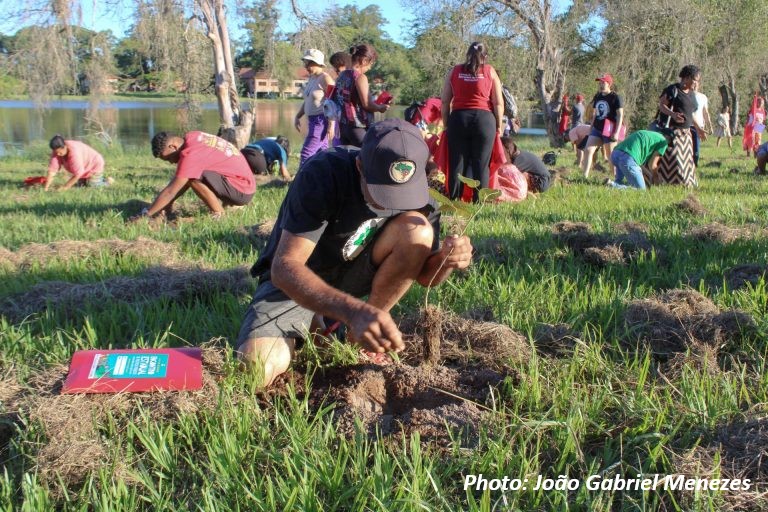 The environmental issue is directly linked to the agrarian issue. In this historical time, faced with the accelerated pace of plundering of nature that serves to accumulate capital, there are no effective solutions to the ecological crisis other than through people’s agrarian reform.
Therefore, confronting the latifundia and large corporations that profit from the destruction of common goods is a central task in the anti-capitalist and anti-imperialist struggle.
The settlement where two MST activists were murdered is a reference in agroecology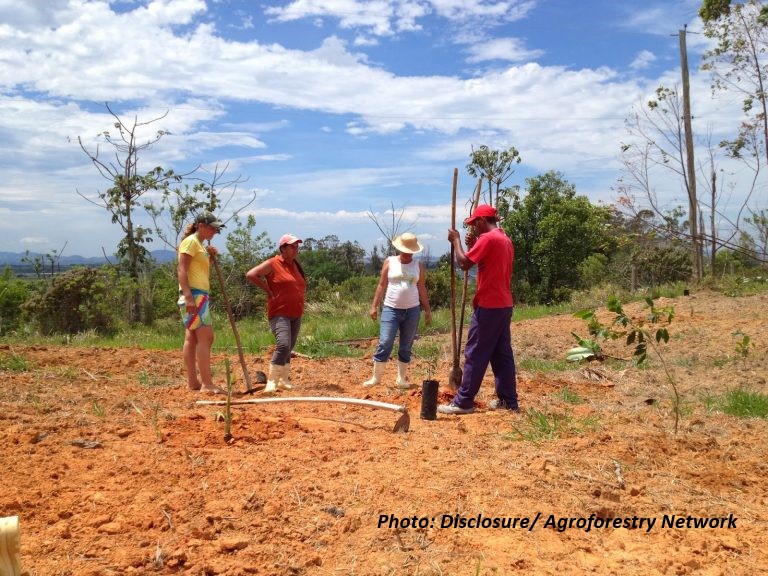
The Olga Benário settlement, created in 2006, is home to more than 50 families of workers who practice diversified agriculture, working in the production of cassava, sugar cane, vegetables, livestock and food for the local market and for subsistence. Agroecological production is highlighted, especially through the implementation of Agroforestry Systems (SAFs) that integrate vegetables, native trees from the Atlantic Forest biome and practices such as collecting forest seeds and green manure.
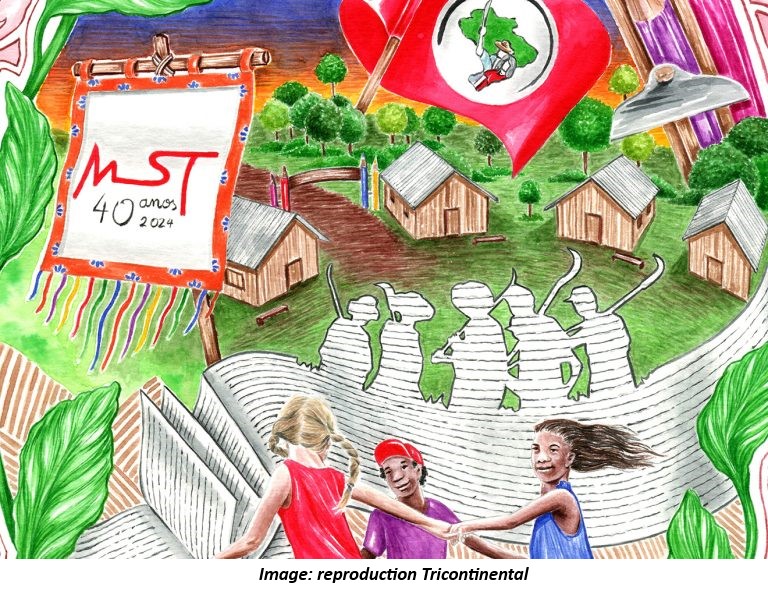 This dossier focuses on the MST’s tactics and forms of organization and why it is the only peasant social movement in Brazil’s history that has managed to survive for over a decade in the face of the political, economic, and military power of Brazil’s large landowners
Read the full report including downloads of the dossier in English and Spanish
In order to use the “Auto-Translate” function: Click the closed caption button; Click the setting button; Click on “Subtitles/CC(1)”; Change from “Portuguese (auto-generated)” to “Auto-Translate”; and Select your language...
Healthy food is not produced through unhealthy relationships!
Healthy food cannot be produced through unhealthy relationships! The work of peasant women in agroecological production and the defense of 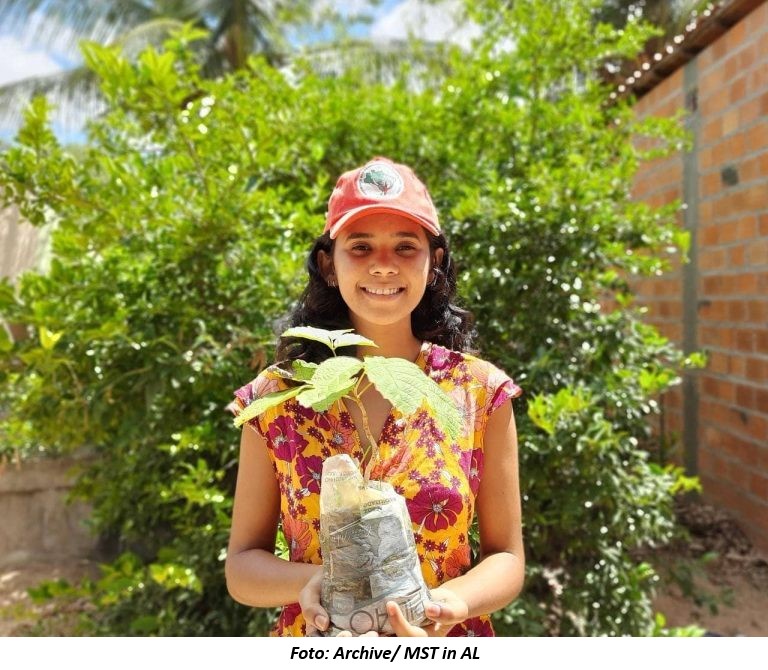 common goods holds political, social, and economic significance, aiming for protagonism and autonomy as a feminist practice, primarily in the construction of Popular Peasant Feminism.
It is important to make visible these spaces of construction, considering that we still experience gender relations in the countryside that are hierarchical, patriarchal, and racialized, easily observable in the daily lives of communities/settlements/camps. As Moura, Marques, and Oliveira (2016) found in studies conducted in settlement areas and other communities, women participate in family agricultural production; however, a strong gender inequality renders this work invisible, demonstrating that the sexual division of labor permeates the organization of life in the territories.
One way to render women’s work invisible is through the concept of “help,” where their multiple trips in the field, in the cooperative, and in dealing with animals are considered merely complementary to men’s work, just as their income is understood as supplemental to family income—essentially as “help.” Additionally, the responsibility for household care, the yard, and the people around them continues to fall almost exclusively on the women in the house, often assigned to girls at a young age, impacting their access to education, their time for play as a necessary practice for cognitive development, and their right to leisure and rest. Read the article.