In Dilma Visit, Protesters Recall Martyrs of the Amazon
By Felipe Milanez in Washington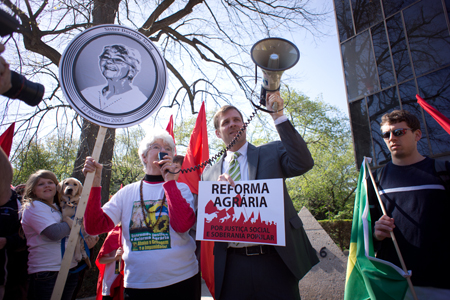
The Embassy of Brazil in Washington, a modernist building that contrasts with the classical properties of the beautiful Embassy Row, the sector of embassies of the U.S. capital, hosted on Monday April 9th a march that brought together about one hundred people, including students, activists and Brazilians living in the region, who demonstrated during the visit of President Rousseff the city.
The protest, according to organizers, had four reasons: the violence in the countryside, especially in the Amazon; the impunity of the masterminds and executors of these crimes; changes in the Brazilian Forestry Code; and the construction of large dams in the Amazon.
Amid the flags of the Movement of Landless Rural Workers (MST), posters stamped images of the couple José Cláudio Ribeiro da Silva and Maria do Espirito Santo da Silva, murdered on May 24, 2011. They were next to pictures of Dorothy Stang, Chico Mendes and a scene of the burial of 19 landless workers killed in the massacre of Eldorado dos Carajas in 1996.

 Transcription of the talk by João Pedro Stedile, of the MST, in the meeting between Dilma and representatives of civil society held on January 26 2012 during the Thematic Social Forum in Porto Alegre.
 While visiting the MST Agrarian Reform Store in the public market of Porto Allegre (RS), Jose Graziano da Silva, General Director of the United Nations Organization for Food and Agriculture (FAO) saw the successful products derived from settlements for agrarian reform and family farming.

 La Via Campesina (a sister organization of MST) presents a political platform to the federal government of Brazil which includes emergency measures, medium term measures, and strategies for the development and strengthening of family-based and peasant agriculture. The proposals are listed below.
 The report amending the Forest Code, presented by congressman Aldo Rebelo (Communist Party of Brazil [PCdoB]) and approved by the House of Representatives Special Commission benefits the large landholders of Agribusiness.