Settlers in Paraná celebrate 15 years of access to popular education
The celebration became more motivated by being combined with the inauguration of the new building of the Campo Chico Mendes State College
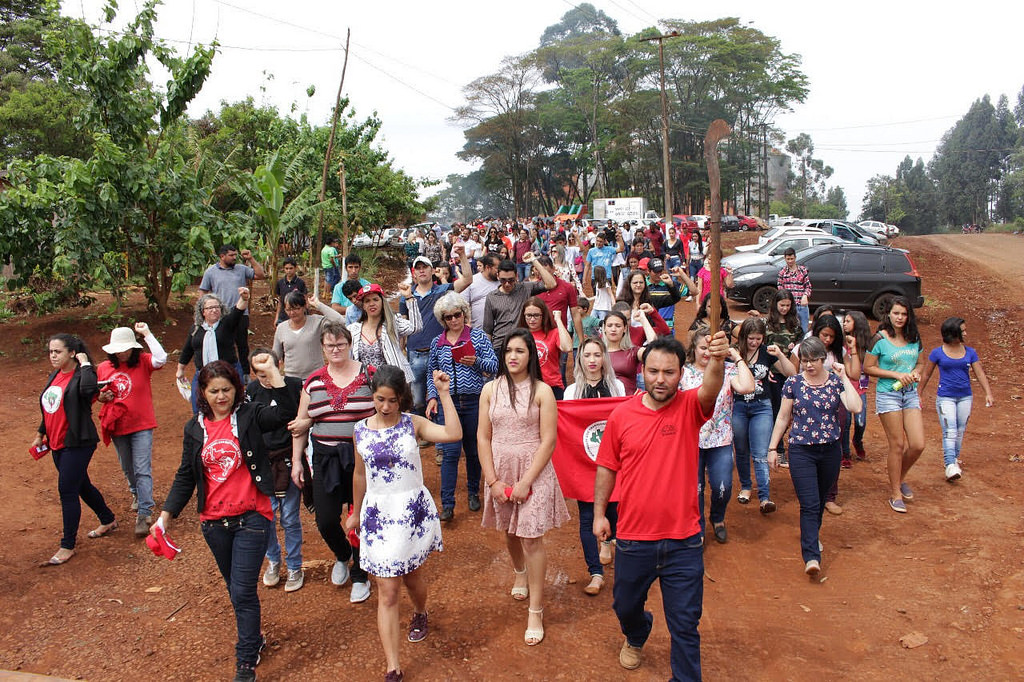
The celebration became more motivated by being combined with the inauguration of the new building of the Campo Chico Mendes State College
With representations of the five regions of the country, more than 400 militants of the MST met 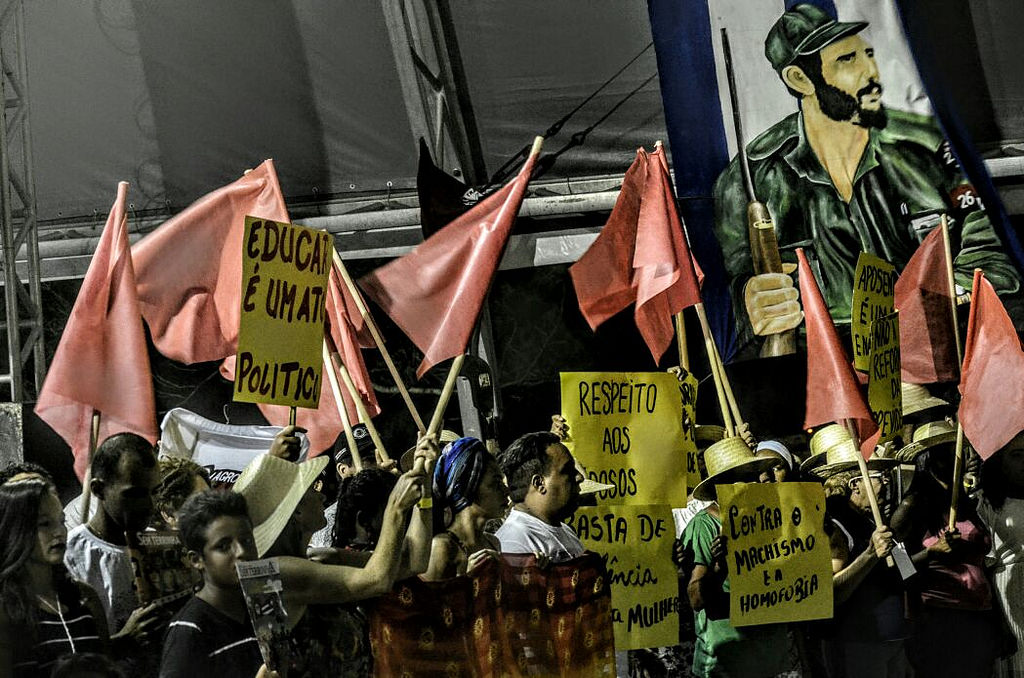 in Fortaleza-CE for the meeting of the National Coordination of the Movement, between January 23 and 27, 2017. With deep reflections, dialogue and a lot of excitement in a revolutionary mística, the Movement's whole team deliberated on an extensive calendar of struggles to confront the threats to social rights carried out by coup president Michel Temer.
 "We need to radicalize the fight for land!"
The 6th Congress of the MST was a moment of debates and struggles that aligned the movement's policies for the next period, and put on the agenda the discussion of People's Agrarian Reform, says Kelli Mafort, of the national coordination of the MST and the gender sector of the movement.
 Dear Friends of the MST,
We came to your presence to inform you of some very important recent events that happened in the struggle for Brazilian Agrarian Reform, and the situation in the countryside in general.
In recent years, capital has been implementing the model of agricultural production of agribusiness that we have denounced as perverse to the interests of the Brazilian people. A model based on monoculture, intensive use of poisons that contaminate food, unemployment and the expulsion of the rural population. A model that destroys biodiversity and has serious consequences for the climate balance.
 By Igor Carvalho and Glauco Faria
With a presence in 23 states and the Federal District and with more than 900 settlements with 150 thousand families, the MST celebrates its 30th anniversary this week.
 by Eduardo Scolese, of Agência Folha
João Pedro Stedile, 59, economist and leader of the Landless Workers Movement (Movimento dos Trabalhadores Rurais Sem Terra, MST), says that it is necessary to take advantage of the protests to create new mechanisms for popular participation in the destiny of the country.
If this doesn’t happen, he says, “the mobilizations will return stronger and more radical”.
The Friends of the MST has translated three recent interviews with MST leaders on the state of agrarian reform in the face of the intrangience of the Brazilian government and the onslaught of international capital and agri-business.
João Pedro Stédile, a founder and coordinator of the MST estimates that the current moment is an ebb of the popular movement.First, an interview with João Pedro Stédile with ABCD Maior. Read the full interview here.
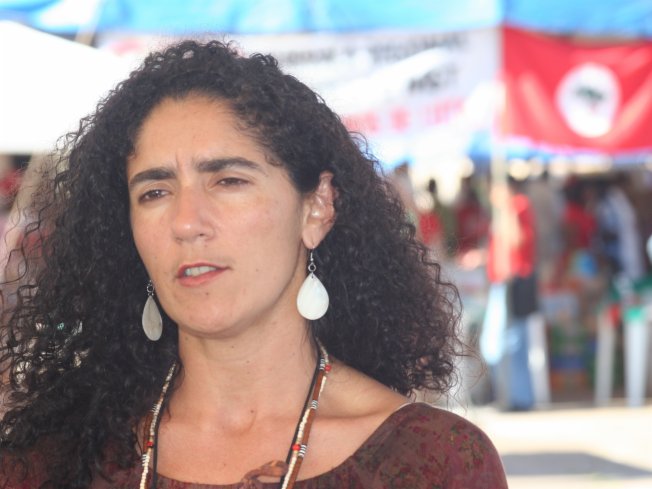 In an interview, Marina dos Santos, a member of the MST's National Coordination, discuss how Agrarian Reform came to a stop in 2012 and there were few investments by the government in production, in family farmers and in the settlements. Agrarian Reform is paralyzed because of the development model in question in Brazil today, agribusiness.¨ This is the
  analysis of Marina dos Santos, of the National Coordination of the MST. Read the interview here.
According to Gilmar Mauro, a member of the MST national leadership, “We are facing this very big offensive by the court in relation to the settlement areas. The Brazilian state, agribusiness, the state and federal governments are working together to prevent the advance of agrarian reform.” Read the interview here.
By José Coutinho Junior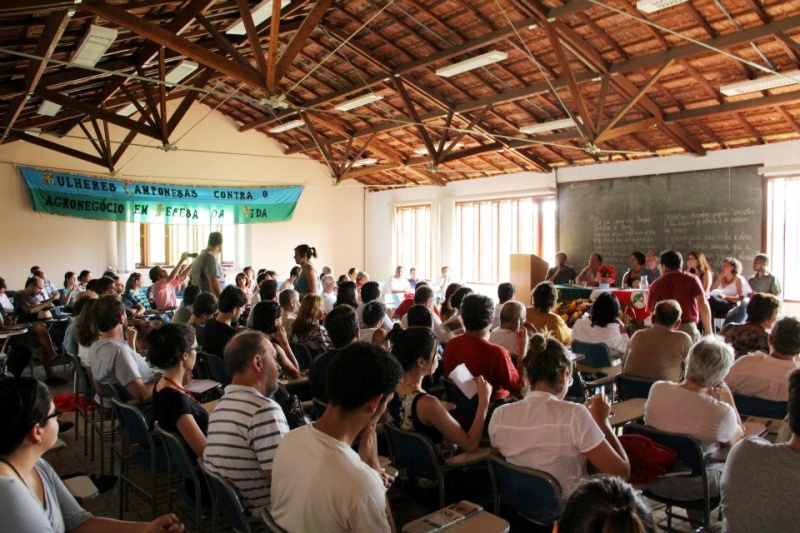
More than 200 people from various social movements, political parties and NGOs gathered this past Sunday (12/9), at the National School Florestan Fernandes (ENFF) for the Meeting of Friends and Friends of the MST. João Pedro Stedile, MST leader, began the meeting with an analysis of the forces acting on the class struggle of the Brazilian society and how this is reflected in the countryside.
"What we face today in agriculture is no longer the backward landowner, now, when we fight for land it is necessary to face the entire capitalist system, represented mainly by finance capital and the bourgeoisie, to see that they do not have total hegemony in government clinging together with the judiciary and the media."
The rural social movements that gathered this week at the Unity Meeting of Workers and Peoples of the Countryside, Waters, and Forests in Brasilia released a joint statement representing a demonstration of the political unity of the peasants, small farmers, landless, indigenous and afro-descendants, along with environmentalists, human rights activists and students who also participated.
The meeting is a response to the challenges of our country to overcome inequality in land distribution, which remains unchanged since the '20s, but with economic, social, cultural and environmental risks as a result of the primary specialization of the economy.
The capitalist project underway in Brazil, represented in the countryside by agribusiness, aims to accumulate capital in the primary sector, serving the interests and the rule of foreign capital by means of the transnational corporations.
The offensive of this project causes the crushing and displacement of workers and peoples of the countryside and of the waters and forests. Furthermore, it prevents the implementation of agrarian reform, the recognition and demarcation of indigenous and afro-descendant territories.
 FINAL DECLARATION OF THE PEOPLES’ SUMMIT AT RIO+20 FOR SOCIAL AND ENVIRONMENTAL JUSTICE IN DEFENSE OF THE COMMONS, AGAINST THE COMMODIFICATION OF LIFE